Wednesday, July 27, 2011

Civil War

A civil war is a war between organized groups within the same nation state or republic,or, less commonly, between two countries created from a formerly-united nation state. The aim of one side may be to take control of the country or a region, to achieve independence for a region, or to change government policies. The term is a calque of the Latin bellum civile which was used to refer to the various civil wars of the Roman Republic in the 1st century BC.
A civil war is a high-intensity conflict, often involving regular armed forces, that is sustained, organized and large-scale. Civil wars may result in large numbers of casualties and the consumption of significant resources.
Civil wars since the end of World War II have lasted on average just over four years, a dramatic rise from the one-and-a-half year average of the 1900-1944 period. While the rate of emergence of new civil wars has been relatively steady since the mid-19th century, the increasing length of those wars resulted in increasing numbers of wars ongoing at any one time. For example, there were no more than five civil wars underway simultaneously in the first half of the 20th century, while over 20 concurrent civil wars were occurring at the end of the Cold War, before a significant decrease as conflicts strongly associated with the superpower rivalry came to an end. Since 1945, civil wars have resulted in the deaths of over 25 million people, as well as the forced displacement of millions more. Civil wars have further resulted in economic collapse; Burma (Myanmar), Uganda and Angola are examples of nations that were considered to have promising futures before being engulfed in civil wars.

French Revolution

The French Revolution  was a period of radical social and political upheaval in French and European history. The absolute monarchy that had ruled France for centuries collapsed in three years. French society underwent an epic transformation as feudal, aristocratic and religious privileges evaporated under a sustained assault from left-wing political groups and the masses on the streets. Old ideas about hierarchy and tradition succumbed to new Enlightenment principles of citizenship and inalienable rights.
The French Revolution began in 1789 with the convocation of the Estates-General in May. The first year of the Revolution witnessed members of the Third Estate proclaiming the Tennis Court Oath in June, the assault on the Bastille in July, the passage of the Declaration of the Rights of Man and of the Citizen in August, and an epic march on Versailles that forced the royal court back to Paris in October. The next few years were dominated by tensions between various liberal assemblies and a right-wing monarchy intent on thwarting major reforms. A republic was proclaimed in September 1792 and King Louis XVI was executed the next year. External threats also played a dominant role in the development of the Revolution. The French Revolutionary Wars started in 1792 and ultimately featured spectacular French victories that facilitated the conquest of the Italian peninsula, the Low Countries and most territories west of the Rhine – achievements that had defied previous French governments for centuries. Internally, popular sentiments radicalized the Revolution significantly, culminating in the rise of Maximilien Robespierre and the Jacobins and virtual dictatorship by the Committee of Public Safety during the Reign of Terror from 1793 until 1794 during which between 16,000 and 40,000 people were killed. After the fall of the Jacobins and the execution of Robespierre, the Directory assumed control of the French state in 1795 and held power until 1799, when it was replaced by the Consulate under Napoleon Bonaparte.

Friday, December 3, 2010

Archaeologically important places in India

Important archaeological finding left un-attended
Taj Mahal Agra
 PLACES OF INTEREST IN RAJASTHAN
Ancient Tippu Fort at Palakkad, Kerala
Stone carvings on mahabalipuram
 Top Reasons to Visit Kerala, South India.

Wednesday, December 1, 2010

The Indus Valley Civilization

The Indus Valley Civilization (IVC) was a Bronze Age civilization (3300–1300 BCE; mature period 2600–1900 BCE) which was centred mostly in the western part of the Indian Subcontinent and which flourished around the Indus River basin. Primarily centered along the Indus and the Punjab region, the civilization extended into the Ghaggar-Hakra River valley and the Ganges-Yamuna Doab, encompassing most of what is now Pakistan, as well as extending into the westernmost states of modern-day India, southeastern Afghanistan, and the easternmost part of Balochistan, Iran.
The mature phase of this civilization is known as the Harappan Civilization, as the first of its cities to be unearthed was the one at Harappa, excavated in the 1920s in what was at the time the Punjab province of British India (now in Pakistan).Excavation of IVC sites have been ongoing since 1920, with important breakthroughs occurring as recently as 1999. Mohenjo-Daro, a UNESCO World Heritage Site, is another well-known IVC archeological site.
The Harappan language is not directly attested and its affiliation is unknown, though Proto-Dravidian, Elamo-Dravidian, or (Para-)Munda relations have been posited by scholars such as Iravatham Mahadevan, Asko Parpola, F.B.J. Kuiper, and Michael Witzel.

Ancient Egypt

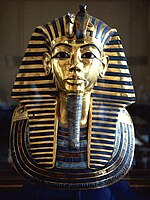
Ancient Egypt was an ancient civilization of eastern North Africa, concentrated along the lower reaches of the Nile River in what is now the modern country of Egypt. The civilization coalesced around 3150 BC with the political unification of Upper and Lower Egypt under the first pharaoh, and it developed over the next two millennia. Ancient Egypt reached its pinnacle during the New Kingdom, after which it entered a period of slow decline. Egypt was conquered by a succession of foreign powers in this late period, and the rule of the pharaohs officially ended in 31 BC when the early Roman Empire conquered Egypt and made it a province.
Egypt has left a lasting legacy. Its art and architecture has been widely copied, and its antiquities have been carried off to the far corners of the world. Egypt's monumental ruins have inspired the imaginations of travellers and writers for centuries. A newfound respect for antiquities and excavations in the early modern period led to the scientific investigation of Egyptian civilization and a greater appreciation of its cultural legacy for the world.

Tuesday, November 30, 2010

The Crusades

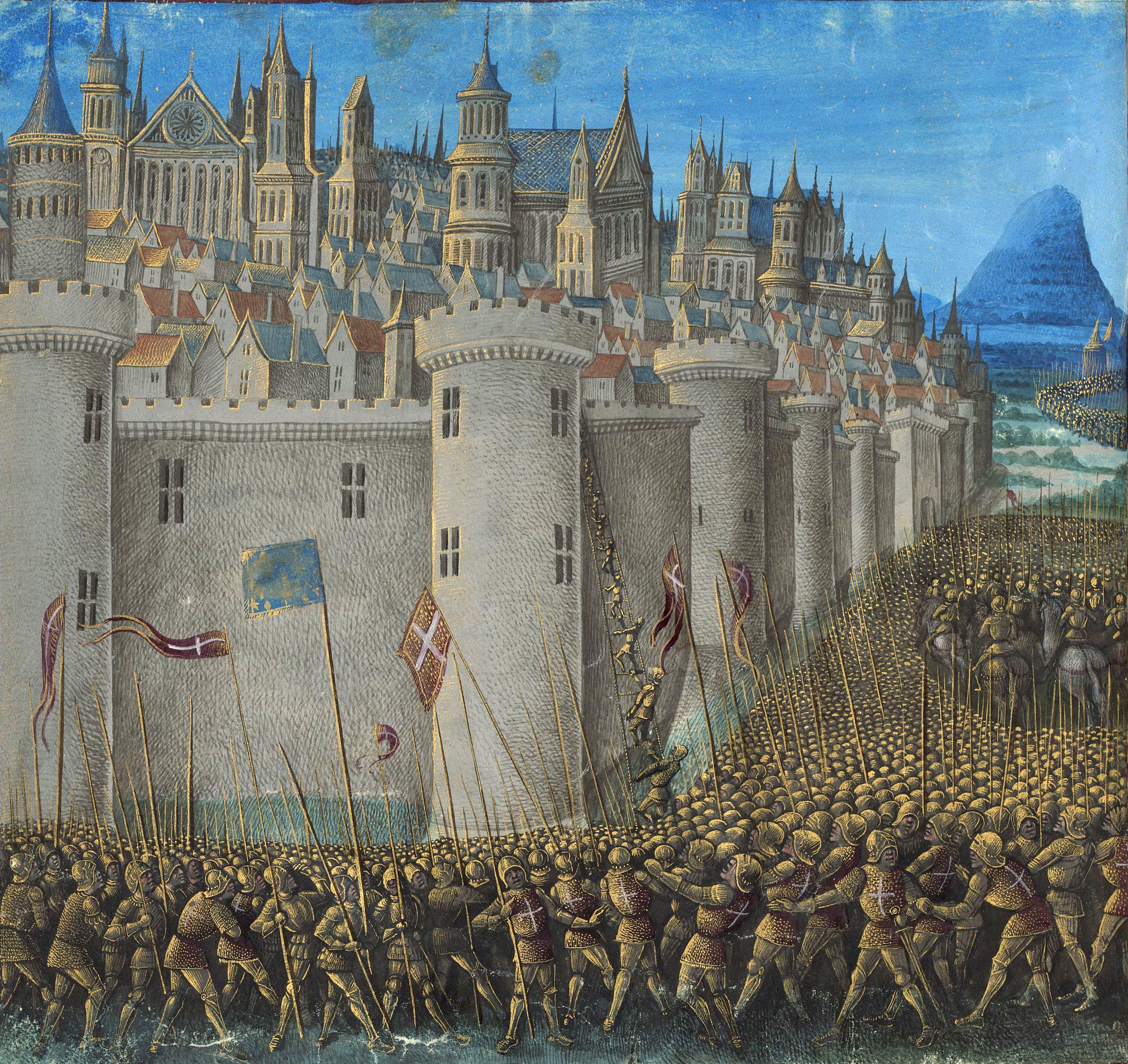
The Crusades were a series of religiously sanctioned military campaigns waged by much of Roman Catholic Europe, particularly the Franks of France and the Holy Roman Empire. The specific crusades to restore Christian control of the Holy Land were fought over a period of nearly 200 years, between 1095 and 1291. Other campaigns in Spain and Eastern Europe continued into the 15th century. The Crusades were fought mainly by Roman Catholic forces (taking place after the East-West Schism and mostly before the Protestant Reformation) against Muslims who had occupied the near east since the time of the Rashidun Caliphate, although campaigns were also waged against pagan Slavs, pagan Balts, Jews, Russian and Greek Orthodox Christians, Mongols, Cathars, Hussites, Waldensians, Old Prussians, and political enemies of the various popes. Orthodox Christians also took part in fighting against Islamic forces in some Crusades. Crusaders took vows and were granted penance for past sins, often called an indulgence.
The Crusades originally had the goal of recapturing Jerusalem and the Holy Land from Muslim rule and their campaigns were launched in response to a call from the Christian Byzantine Empire for help against the expansion of the Muslim Seljuk Turks into Anatolia. The term is also used to describe contemporaneous and subsequent campaigns conducted through to the 16th century in territories outside the Levant usually against pagans, heretics, and peoples under the ban of excommunication for a mixture of religious, economic, and political reasons. Rivalries among both Christian and Muslim powers led also to alliances between religious factions against their opponents, such as the Christian alliance with the Sultanate of Rum during the Fifth Crusade.
The Crusades had far-reaching political, economic, and social impacts, some of which have lasted into contemporary times. Because of internal conflicts among Christian kingdoms and political powers, some of the crusade expeditions were diverted from their original aim, such as the Fourth Crusade, which resulted in the sack of Christian Constantinople and the partition of the Byzantine Empire between Venice and the Crusaders. The Sixth Crusade was the first crusade to set sail without the official blessing of the Pope. The Seventh, Eighth and Ninth Crusades resulted in Mamluk and Hafsid victories, as the Ninth Crusade marked the end of the Crusades in the Middle East.


Friday, November 26, 2010

The Roman Empire

The Roman Empire was the post-Republican period of the ancient Roman civilization, characterised by an autocratic form of government and large territorial holdings in Europe and around the Mediterranean. The term is used to describe the Roman state during and after the time of the first emperor, Augustus.
The 500-year-old Roman Republic, which preceded it, had been weakened and subverted through several civil wars. Several events are commonly proposed to mark the transition from Republic to Empire, including Julius Caesar's appointment as perpetual dictator (44 BC), the Battle of Actium (2 September 31 BC), and the Roman Senate's granting to Octavian the honorific Augustus (4 January 27 BC). Roman expansion began in the days of the Republic, but reached its zenith under Emperor Trajan. At this territorial peak, the Roman Empire controlled approximately 6.5 million km2 of land surface. Because of the Empire's vast extent and long endurance, the institutions and culture of Rome had a profound and lasting influence on the development of language, religion, architecture, philosophy, law, and forms of government in the territory it governed, particularly Europe, and by means of European expansionism throughout the modern world.
In the late 3rd century AD, Diocletian established the practice of dividing authority between four co-emperors, in order to better secure the vast territory, putting an end to the Crisis of the Third Century. During the following decades the empire was often divided along an East/West axis. After the death of Theodosius I in 395 it was divided for the last time.
The Western Roman Empire collapsed in 476 as Romulus Augustus was forced to abdicate by Odoacer. The Eastern Roman or Byzantine Empire ended in 1453 with the death of Constantine XI and the capture of Constantinople by the Ottoman Turks led by Mehmed II.