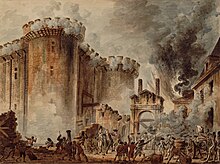
A civil war is a war between organized groups within the same nation state or republic,or, less commonly, between two countries created from a formerly-united nation state. The aim of one side may be to take control of the country or a region, to achieve independence for a region, or to change government policies. The term is a calque of the Latin bellum civile which was used to refer to the various civil wars of the Roman Republic in the 1st century BC.
A civil war is a high-intensity conflict, often involving regular armed forces, that is sustained, organized and large-scale. Civil wars may result in large numbers of casualties and the consumption of significant resources.
Civil wars since the end of World War II have lasted on average just over four years, a dramatic rise from the one-and-a-half year average of the 1900-1944 period. While the rate of emergence of new civil wars has been relatively steady since the mid-19th century, the increasing length of those wars resulted in increasing numbers of wars ongoing at any one time. For example, there were no more than five civil wars underway simultaneously in the first half of the 20th century, while over 20 concurrent civil wars were occurring at the end of the Cold War, before a significant decrease as conflicts strongly associated with the superpower rivalry came to an end. Since 1945, civil wars have resulted in the deaths of over 25 million people, as well as the forced displacement of millions more. Civil wars have further resulted in economic collapse; Burma (Myanmar), Uganda and Angola are examples of nations that were considered to have promising futures before being engulfed in civil wars.
A civil war is a high-intensity conflict, often involving regular armed forces, that is sustained, organized and large-scale. Civil wars may result in large numbers of casualties and the consumption of significant resources.
Civil wars since the end of World War II have lasted on average just over four years, a dramatic rise from the one-and-a-half year average of the 1900-1944 period. While the rate of emergence of new civil wars has been relatively steady since the mid-19th century, the increasing length of those wars resulted in increasing numbers of wars ongoing at any one time. For example, there were no more than five civil wars underway simultaneously in the first half of the 20th century, while over 20 concurrent civil wars were occurring at the end of the Cold War, before a significant decrease as conflicts strongly associated with the superpower rivalry came to an end. Since 1945, civil wars have resulted in the deaths of over 25 million people, as well as the forced displacement of millions more. Civil wars have further resulted in economic collapse; Burma (Myanmar), Uganda and Angola are examples of nations that were considered to have promising futures before being engulfed in civil wars.