Friday, December 3, 2010

Archaeologically important places in India

Important archaeological finding left un-attended
Taj Mahal Agra
 PLACES OF INTEREST IN RAJASTHAN
Ancient Tippu Fort at Palakkad, Kerala
Stone carvings on mahabalipuram
 Top Reasons to Visit Kerala, South India.

Wednesday, December 1, 2010

The Indus Valley Civilization

The Indus Valley Civilization (IVC) was a Bronze Age civilization (3300–1300 BCE; mature period 2600–1900 BCE) which was centred mostly in the western part of the Indian Subcontinent and which flourished around the Indus River basin. Primarily centered along the Indus and the Punjab region, the civilization extended into the Ghaggar-Hakra River valley and the Ganges-Yamuna Doab, encompassing most of what is now Pakistan, as well as extending into the westernmost states of modern-day India, southeastern Afghanistan, and the easternmost part of Balochistan, Iran.
The mature phase of this civilization is known as the Harappan Civilization, as the first of its cities to be unearthed was the one at Harappa, excavated in the 1920s in what was at the time the Punjab province of British India (now in Pakistan).Excavation of IVC sites have been ongoing since 1920, with important breakthroughs occurring as recently as 1999. Mohenjo-Daro, a UNESCO World Heritage Site, is another well-known IVC archeological site.
The Harappan language is not directly attested and its affiliation is unknown, though Proto-Dravidian, Elamo-Dravidian, or (Para-)Munda relations have been posited by scholars such as Iravatham Mahadevan, Asko Parpola, F.B.J. Kuiper, and Michael Witzel.

Ancient Egypt

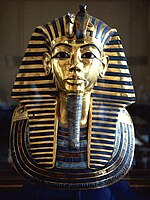
Ancient Egypt was an ancient civilization of eastern North Africa, concentrated along the lower reaches of the Nile River in what is now the modern country of Egypt. The civilization coalesced around 3150 BC with the political unification of Upper and Lower Egypt under the first pharaoh, and it developed over the next two millennia. Ancient Egypt reached its pinnacle during the New Kingdom, after which it entered a period of slow decline. Egypt was conquered by a succession of foreign powers in this late period, and the rule of the pharaohs officially ended in 31 BC when the early Roman Empire conquered Egypt and made it a province.
Egypt has left a lasting legacy. Its art and architecture has been widely copied, and its antiquities have been carried off to the far corners of the world. Egypt's monumental ruins have inspired the imaginations of travellers and writers for centuries. A newfound respect for antiquities and excavations in the early modern period led to the scientific investigation of Egyptian civilization and a greater appreciation of its cultural legacy for the world.

Tuesday, November 30, 2010

The Crusades

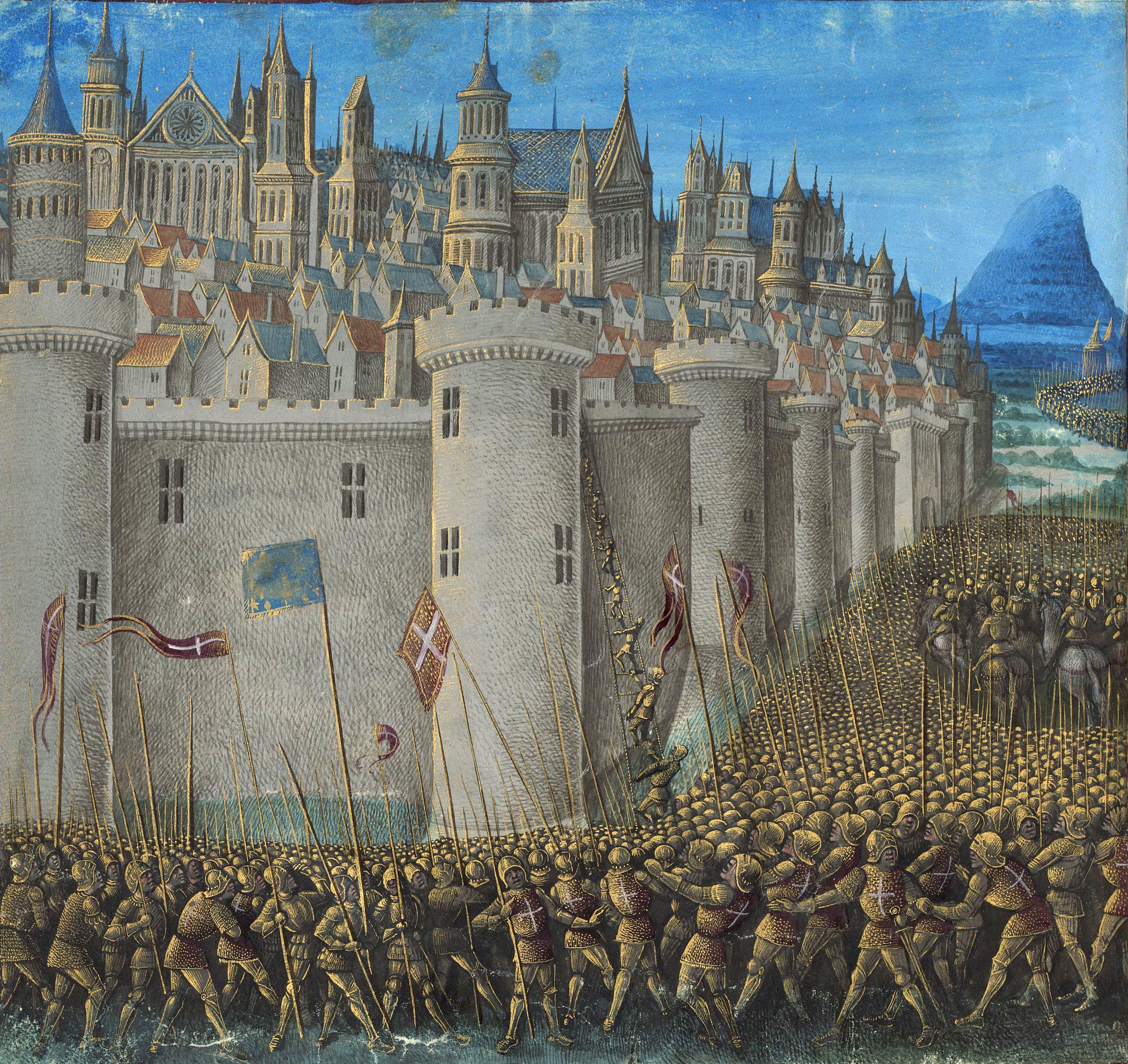
The Crusades were a series of religiously sanctioned military campaigns waged by much of Roman Catholic Europe, particularly the Franks of France and the Holy Roman Empire. The specific crusades to restore Christian control of the Holy Land were fought over a period of nearly 200 years, between 1095 and 1291. Other campaigns in Spain and Eastern Europe continued into the 15th century. The Crusades were fought mainly by Roman Catholic forces (taking place after the East-West Schism and mostly before the Protestant Reformation) against Muslims who had occupied the near east since the time of the Rashidun Caliphate, although campaigns were also waged against pagan Slavs, pagan Balts, Jews, Russian and Greek Orthodox Christians, Mongols, Cathars, Hussites, Waldensians, Old Prussians, and political enemies of the various popes. Orthodox Christians also took part in fighting against Islamic forces in some Crusades. Crusaders took vows and were granted penance for past sins, often called an indulgence.
The Crusades originally had the goal of recapturing Jerusalem and the Holy Land from Muslim rule and their campaigns were launched in response to a call from the Christian Byzantine Empire for help against the expansion of the Muslim Seljuk Turks into Anatolia. The term is also used to describe contemporaneous and subsequent campaigns conducted through to the 16th century in territories outside the Levant usually against pagans, heretics, and peoples under the ban of excommunication for a mixture of religious, economic, and political reasons. Rivalries among both Christian and Muslim powers led also to alliances between religious factions against their opponents, such as the Christian alliance with the Sultanate of Rum during the Fifth Crusade.
The Crusades had far-reaching political, economic, and social impacts, some of which have lasted into contemporary times. Because of internal conflicts among Christian kingdoms and political powers, some of the crusade expeditions were diverted from their original aim, such as the Fourth Crusade, which resulted in the sack of Christian Constantinople and the partition of the Byzantine Empire between Venice and the Crusaders. The Sixth Crusade was the first crusade to set sail without the official blessing of the Pope. The Seventh, Eighth and Ninth Crusades resulted in Mamluk and Hafsid victories, as the Ninth Crusade marked the end of the Crusades in the Middle East.


Friday, November 26, 2010

The Roman Empire

The Roman Empire was the post-Republican period of the ancient Roman civilization, characterised by an autocratic form of government and large territorial holdings in Europe and around the Mediterranean. The term is used to describe the Roman state during and after the time of the first emperor, Augustus.
The 500-year-old Roman Republic, which preceded it, had been weakened and subverted through several civil wars. Several events are commonly proposed to mark the transition from Republic to Empire, including Julius Caesar's appointment as perpetual dictator (44 BC), the Battle of Actium (2 September 31 BC), and the Roman Senate's granting to Octavian the honorific Augustus (4 January 27 BC). Roman expansion began in the days of the Republic, but reached its zenith under Emperor Trajan. At this territorial peak, the Roman Empire controlled approximately 6.5 million km2 of land surface. Because of the Empire's vast extent and long endurance, the institutions and culture of Rome had a profound and lasting influence on the development of language, religion, architecture, philosophy, law, and forms of government in the territory it governed, particularly Europe, and by means of European expansionism throughout the modern world.
In the late 3rd century AD, Diocletian established the practice of dividing authority between four co-emperors, in order to better secure the vast territory, putting an end to the Crisis of the Third Century. During the following decades the empire was often divided along an East/West axis. After the death of Theodosius I in 395 it was divided for the last time.
The Western Roman Empire collapsed in 476 as Romulus Augustus was forced to abdicate by Odoacer. The Eastern Roman or Byzantine Empire ended in 1453 with the death of Constantine XI and the capture of Constantinople by the Ottoman Turks led by Mehmed II.

Gupta Empire

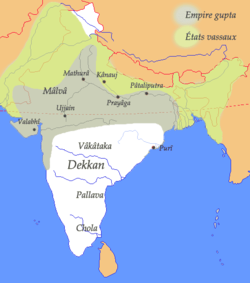
The Gupta Empire  was an Ancient Indian empire which existed approximately from 320 to 550 CE and covered much of the Indian Subcontinent . Founded by Maharaja Sri-Gupta, the dynasty was the model of a classical civilization. The peace and prosperity created under leadership of Guptas enabled the pursuit of scientific and artistic endeavors This period is called the Golden Age of India and was marked by extensive inventions and discoveries in science, technology, engineering, art, dialectic, literature, logic, mathematics, astronomy, religion and philosophy that crystallized the elements of what is generally known as Hindu culture Chandragupta I, Samudragupta, and Chandragupta II were the most notable rulers of the Gupta dynasty.
The high points of this cultural creativity are magnificent architectures, sculptures and paintings. The Gupta period produced scholars such as Kalidasa, Aryabhata, Varahamihira, Vishnu Sharma, Vatsyayana and Prashastapada who made great advancements in many academic fields. Science and political administration reached new heights during the Gupta era. Strong trade ties also made the region an important cultural center and set the region up as a base that would influence nearby kingdoms and regions in Burma, Sri Lanka, Malay Archipelago and Indochina.
The earliest available Puranas are also thought to have been written around this period. The empire gradually declined because of many factors like the substantial loss of territory and imperial authority caused by their own erstwhile feudatories and the invasion by the Hunas from Central Asia. After the collapse of the Gupta Empire in the 6th century, India was again ruled by numerous regional kingdoms. A minor line of the Gupta clan continued to rule Magadha after the disintegration of the empire. These Guptas were ultimately ousted by the Vardhana king Harsha, who established an empire in the first half of the 7th century.

Thursday, November 25, 2010

Buddhism

Buddhism is a religion and philosophy encompassing a variety of traditions, beliefs and practices, largely based on teachings attributed to Siddhartha Gautama, commonly known as the Buddha .The Buddha lived and taught in the northeastern Indian subcontinent some time between the 6th and 4th centuries BCE. He is recognized by Buddhists as an awakened or enlightened teacher who shared his insights to help sentient beings end suffering (or dukkha), achieve nirvana, and escape what is seen as a cycle of suffering and rebirth.
Two major branches of Buddhism are recognized: Theravada ("The School of the Elders") and Mahayana ("The Great Vehicle"). Theravada—the oldest surviving branch—has a widespread following in Sri Lanka and Southeast Asia, and Mahayana is found throughout East Asia and includes the traditions of Pure Land, Zen, Nichiren Buddhism, Tibetan Buddhism, Shingon, Tendai and Shinnyo-en. In some classifications Vajrayana—a subcategory of Mahayana practiced in Tibet and Mongolia—is recognized as a third branch. While Buddhism remains most popular within Asia, both branches are now found throughout the world. Estimates of Buddhists worldwide vary significantly depending on the way Buddhist adherence is defined. Lower estimates are between 350-500 million. However, when including Chinese religion which has traditionally consisted of forms of Mahayana Buddhism alongside Chinese folk religion the number would range from 1—1.6 billion.

Jainism

JainismSymbol.PNG Jainism is an Indian religion that prescribes a path of non-violence towards all living beings. Its philosophy and practice emphasize the necessity of self-effort to move the soul towards divine consciousness and liberation. Any soul that has conquered its own inner enemies and achieved the state of supreme being is called Jina (Conqueror or Victor). Jainism is also referred to as Shraman (self-reliant) Dharma or the religion of Nirgantha (who does not have attachments and aversions) by ancient texts. Jainism is commonly referred to as Jain Dharma in Hindi and Samanam in Tamil.
Jainism, which its followers consider to have always existed, has prehistoric origins dating before 3000 BC, and before the beginning of Indo-Aryan culture. Organized Jainism is believed by historians to have arisen between the ninth and the sixth centuries BCE. Some have speculated that the religion may have its roots in much earlier times, reflecting native spirituality prior to the Indo-Aryan migration into India. In the modern world, it is a small but influential religious minority with as many as 4.2 million followers in India, and successful growing immigrant communities in North America, Western Europe, the Far East, Australia and elsewhere.
Jains have successfully sustained this longstanding religion to the present day and have significantly influenced and contributed to ethical, political and economic spheres in India. Jains have an ancient tradition of scholarship and have the highest degree of literacy in India; Jain libraries are the oldest in the country. Tamil Jains and Kannada Jains who are native to their regions, residing in Tamil Nadu and Karnataka respectively early since 1st century BCE, are distinguishable in some of their routines and practices from North Indian Jains, but the core philosophies and belief systems are the same for both cultures.

Christianity


Jesus Christ is the central figure of Christianity.Christianity  is a monotheistic religion based on the life and teachings of Jesus of Nazareth as presented in the New Testament. Christianity is classified as an Abrahamic religion and adherents of the Christian faith are known as Christians. Most Christians believe Jesus is the Son of God, God having become human and the savior of humanity. Because of this, Christians commonly refer to Jesus as Christ or Messiah. The three largest groups in the world of Christianity are the Roman Catholic Church, the Eastern Orthodox churches, and the various churches of Protestantism. The two patriarchates split from one another in 1054 A.D., and Protestantism came into existence during the Protestant Reformation of the 16th century, splitting from the Roman Catholic Church.
Christianity began as a Jewish sect in the mid-1st century. Originating in the eastern Mediterranean, it quickly grew in size and influence over a few decades, and by the 4th century had become the dominant religion within the Roman Empire. During the Middle Ages, most of the remainder of Europe was Christianized, with Christians also being a (sometimes large) religious minority in the Middle East, North Africa, Ethiopia and parts of India. Following the Age of Discovery, through missionary work and colonization, Christianity spread to the Americas, Australasia, and the rest of the world. Christianity, therefore, is a major influence in the shaping of Western civilization.

Wednesday, November 24, 2010

Constitution of India

Constitution of India is the supreme law of India. It lays down the framework defining fundamental political principles, establishes the structure, procedures, powers and duties, of the government and spells out the fundamental rights, directive principles and duties of citizens. Passed by the Constituent Assembly on 26 November 1949, it came into effect on 26 January 1950. The date 26 January was chosen to commemorate the declaration of independence of 1930. It declares the Union of India to be a sovereign, socialist, secular, democratic republic, assuring its citizens of justice, equality, and liberty and, to promote among them all, fraternity. The words "socialist", "secular", "integrity" and "to promote among them all fraternity" were added to the definition in 1976 by constitutional amendment.India celebrates the adoption of the constitution on 26 January each year as Republic Day. It is the longest written constitution of any sovereign country in the world, containing 444 articles in 22 parts, 12 schedules and 94 amendments,[5][6] for a total of 117,369 words in the English language version. Besides the English version, there is an official Hindi translation. After coming into effect, the Constitution replaced the Government of India Act 1935 as the governing document of India. Being the supreme law of the country, every law enacted by the government must conform to the constitution. B. R. Ambedkar, was chairman of the Constitution Drafting Committee and instrumental in the drafting of the Indian Constitution.

Feudalism

Feudalism was a set of political and military customs in medieval Europe that flourished between the ninth and fifteenth centuries. Although derived from the Latin word feodum (fief), then in use, the term feudalism and the system it describes were not conceived of as a formal political system by the people living in the Medieval Period. In its classic definition, by François-Louis Ganshof (1944), feudalism describes a set of reciprocal legal and military obligations among the warrior nobility, revolving around the three key concepts of lords, vassals and fiefs. There is also a broader definition, as described by Marc Bloch (1939), that includes not only warrior nobility but the peasantry bonds of manorialism, sometimes referred to as a "feudal society". Because of multiple definitions and other issues, many now see the concept of feudalism as deprived of specific meaning, which has lead in recent decades to many historians and political theorists rejecting feudalism as a useful way for understanding society

Friday, November 19, 2010

Prakrit

Prakrit   is the name for a group of Middle Indic, Indo-Aryan languages, derived from Old Indic dialects. The word, derived from its Indian root "Parikrit", itself has a flexible definition, being defined sometimes as, "original, natural, artless, normal, ordinary, usual", or "vernacular", in contrast to the literary and religious orthodoxy of saṃskṛtā. Alternatively, Prakrit can be taken to mean "derived from an original," means evolved in natural way. The Prakrits became literary languages, generally patronized by kings identified with the Kshatriya caste, but were regarded as illegitimate by the Brahmin orthodoxy. The earliest extant usage of Prakrit is the corpus of inscriptions of Asoka, emperor of India. The various Prakrit languages are associated with different patron dynasties, with different religions and different literary traditions, as well as different regions of the Indian subcontinent.

Sanskrit

Sanskrit  is a historical Indo-Aryan language and the primary liturgical language of Hinduism and Buddhism. Today, it is listed as one of the 22 scheduled languages of India and is an official language of the state of Uttarakhand.
Classical Sanskrit is the standard register as laid out in the grammar of Pāṇini, around the 4th century BCE. Its position in the cultures of Greater India is akin to that of Latin and Greek in Europe and it has significantly influenced most modern languages of the Indian subcontinent, particularly in India and Nepal.
The pre-Classical form of Sanskrit is known as Vedic Sanskrit, with the language of the Rigveda being the oldest and most archaic stage preserved, its oldest core dating back to as early as 1500 BCE. This qualifies Rigvedic Sanskrit as one of the oldest attestations of any Indo-Iranian language, and one of the earliest attested members of the Indo-European language family, the family which includes English and most European languages.
The corpus of Sanskrit literature encompasses a rich tradition of poetry and drama as well as scientific, technical, philosophical and Hindu religious texts. Sanskrit continues to be widely used as a ceremonial language in Hindu religious rituals in the forms of hymns and mantras. Spoken Sanskrit is still in use in a few traditional institutions in India and there are many attempts at revival.

Thursday, October 14, 2010

Stone Age

The Stone Age is a broad prehistoric period during which humans widely used stone for toolmaking. Stone tools were made from a variety of different sorts of stone. For example, flint and chert were shaped (or chipped) for use as cutting tools and weapons, while basalt and sandstone were used for ground stone tools, such as quern-stones. Wood, bone, shell, antler (deer) and other materials were widely used, as well. During the most recent part of the period, sediments (like clay) were used to make pottery. A series of metal technology innovations characterize the later Chalcolithic (Copper Age), Bronze Age and Iron Age.
The period from 2.9 million years ago  encompasses the first use of stone tools in Gona, Ethiopia and its spread and widespread use elsewhere soon thereafter. It ends with the development of agriculture, the domestication of certain animals, and the smelting of copper ore to produce metal. It is termed prehistoric since humanity had not yet started writing—the traditional start of history

Mesolithic age

The Mesolithic (Greek: mesos "middle", lithos stone) or "Middle Stone Age" was a period in the development of human technology in between the Paleolithic or Old Stone Age and the Neolithic or New Stone Age, in which farming appeared. The term was introduced by John Lubbock in his work Pre-historic Times, published in 1865. The term was, however, not much used until V. Gordon Childe popularized it in his book The Dawn of Europe (1947). The start and end dates of the Mesolithic vary by geographical region. In some areas, such as the Near East, farming was already in use by the end of the Pleistocene.

Neolithic age

The Neolithic Age, Era, or Period, or New Stone Age, was a period in the development of human technology, beginning about 9500 BC in the Middle East that is traditionally considered the last part of the Stone Age. The Neolithic followed the terminal Holocene Epipalaeolithic period, beginning with the rise of farming, which produced the "Neolithic Revolution" and ending when metal tools became widespread in the Copper Age (chalcolithic) or Bronze Age or developing directly into the Iron Age, depending on geographical region. The Neolithic is not a specific chronological period, but rather a suite of behavioral and cultural characteristics, including the use of wild and domestic crops and the use of domesticated animals. New findings put the beginning of the Neolithic culture back to around 10700 to 9400 BC in Tell Qaramel in northern Syria, 25 km north of Aleppo. Until those findings are adopted within the archaeological community, the beginning of the Neolithic culture is considered to be in the Levant (Jericho, modern-day West Bank) about 9500 BC. It developed directly from the Epipaleolithic Natufian culture in the region, whose people pioneered the use of wild cereals, which then evolved into true farming. The Natufians can thus be called "proto-Neolithic" (12,500–9500 BC or 12,000-9500 BC). As the Natufians had become dependent on wild cereals in their diet, and a sedentary way of life had begun among them, the climatic changes associated with the Younger Dryas are thought to have forced people to develop farming. By 9500–9000 BC, farming communities arose in the Levant and spread to Asia Minor, North Africa and North Mesopotamia. Early Neolithic farming was limited to a narrow range of plants, both wild and domesticated, which included einkorn wheat, millet and spelt, and the keeping of dogs, sheep and goats. By about 8000 BC, it included domesticated cattle and pigs, the establishment of permanently or seasonally inhabited settlements, and the use of pottery.

Monday, October 11, 2010

Civilization

Civilization  refers to either: 1) the procession of human societies generally toward more development and use of more complex technology, higher population densities, increasing per capita gross domestic product, and other significant advancements; or 2) any human society (for example, "Ancient Greek Civilization") associated with any particular geographical location at a particular time, historical or current. (When used in this second sense, the word is often restricted to apply only to societies that have attained a particular level of advancement, especially the founding of cities, with the word "city" defined in various ways.) The level of advancement of a civilization is often measured by its progress in agriculture, long-distance trade, occupational specialization, and urbanism. Aside from these core elements, civilization is often marked by any combination of a number of secondary elements, including a developed transportation system, writing, standards of measurement (currency, etc.), contract and tort-based legal systems, characteristic art styles (which may pertain to specific cultures), monumental architecture, mathematics, sophisticated metallurgy, and astronomy.

Welcome to the past

Welcome to this history and be aware the past broken cultures and the civilizations.